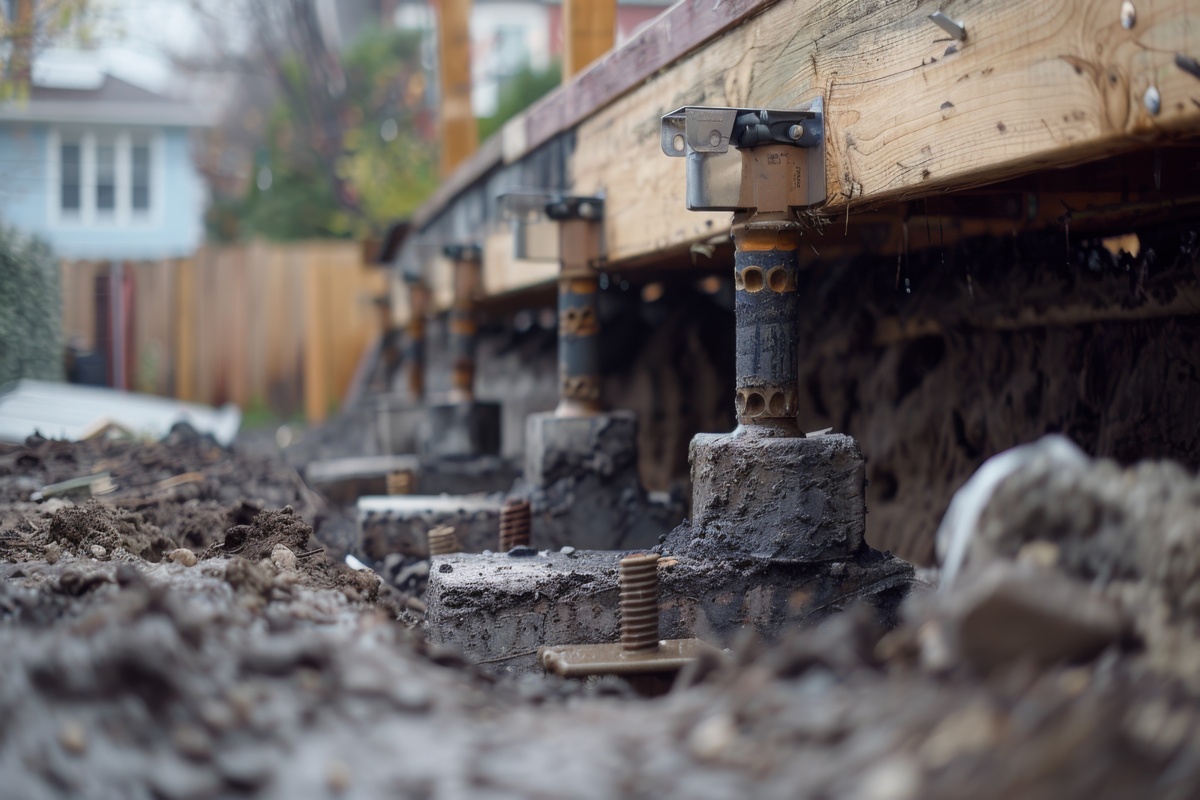
Foundation movement shows up through cracks, sticking doors, and uneven floors. These signs point to structural settlement that requires more than surface repair. In many cases, this is when you need helical piers to stabilize the structure and prevent further damage.
What Helical Piers Actually Fix (and When They’re Used)
Helical piers are deep foundation supports designed to stabilize and, in some cases, lift a settling structure. They transfer the weight of your home to stable soil layers below the surface.
We recommend helical piers when a foundation is no longer supported by the soil near the surface. This is common in areas with shifting or weak soil conditions.
How Helical Piers Stabilize and Lift a Foundation
Helical piers are mechanically installed into the ground until they reach load-bearing soil. Once secured, they support the foundation and can restore it closer to its original position.
When We Recommend Helical Piers for Structural Repairs
Helical piers are often the right solution when:
- Settlement is ongoing or worsening
- Structural cracks are expanding
- Load-bearing walls are affected
- Previous repairs have failed
Key Takeaway: Helical piers are not a surface fix. They address the root cause of foundation settlement by stabilizing the structure from below.
The Most Common Signs Your Foundation Needs Support
Recognizing early warning signs helps prevent larger and more expensive repairs. These issues often appear gradually but signal deeper structural movement.
1. Structural Cracks That Continue to Grow
Cracks in drywall, brick, or concrete can indicate movement. Stair-step cracks in brick and widening interior cracks are clear signs that the foundation is shifting.
2. Doors and Windows That No Longer Operate Properly
Doors that stick or windows that won’t close properly often point to frame distortion caused by foundation settlement.
3. Floors That Are Sloping or Feel Unstable
A noticeable slope or bounce in the floor can indicate uneven support beneath the home. This is especially important in older structures.
4. Separation Around Walls, Ceilings, and Trim
Gaps forming between walls and ceilings or along baseboards show that parts of the structure are moving at different rates.
5. Moisture Problems and Drainage Issues Near the Foundation
Water pooling near the foundation or consistent moisture problems can weaken soil and accelerate settlement.
Need expert help with foundation repair? Contact KC Pier for a free consultation and get answers you can trust.
When You Need Helical Piers and When You Don’t
Not every foundation issue requires helical piers. The right solution depends on the cause and severity of the problem.
Best Cases for Helical Piers
We recommend helical piers when:
- The foundation is actively settling
- Soil conditions cannot support the structure
- Long-term stabilization is required
When Another Repair Method May Be a Better Fit
Some situations call for different solutions:
- Minor cosmetic cracks
- Interior slab leveling
- Drainage corrections without structural movement
Pro Tip: A proper inspection is the only way to determine if you need helical piers or a less invasive repair.
Helical Piers vs Other Foundation Repair Methods
Understanding your options helps you make the right decision for your home.
Helical Piers vs Push Piers
Helical piers are installed by screwing them into the ground, making them ideal for lighter structures and controlled installation. Push piers rely on the weight of the structure to drive them into the soil.
Helical Piers vs Polyjacking or Mudjacking
Polyjacking lifts concrete slabs but does not address deep foundation settlement. Helical piers stabilize the structure at a deeper level.
Helical Piers vs Wall Anchors or Bracing Systems
Wall anchors and braces address bowing walls. Helical piers correct vertical settlement and load-bearing issues.
What to Expect During a Helical Pier Installation
Our process is designed to be clear and efficient, with minimal disruption to your property.
Step 1: Foundation Inspection and Diagnosis
We assess the structure, identify movement patterns, and determine the cause.
Step 2: Pier Placement Planning
Each pier location is carefully planned based on load points and structural needs.
Step 3: Installation and Load Transfer
Piers are installed to the required depth and secured to the foundation.
Step 4: Stabilization and Lift (If Needed)
In some cases, we can lift portions of the foundation to improve alignment.
Step 5: Final Check and Site Cleanup
We verify stability and restore the work area.
Why Homeowners Choose KC Pier for Helical Pier Installation
Choosing the right contractor matters as much as choosing the right solution.
Local Experience With Kansas City Foundations
Our team understands the soil conditions and structural challenges common in this area.
Proven Repair Methods That Last
We focus on solutions that address the cause of the problem, not just the symptoms.
Full-Service Foundation Repair Solutions
We provide complete support, including:
- Helical piers
- Drainage systems
- Crack repair
- Waterproofing
Key Takeaway: A complete approach ensures your foundation stays stable long after the repair is complete.
Schedule a Foundation Inspection Before the Damage Gets Worse
Foundation problems rarely stay the same. Small signs tend to progress, and the longer they go unchecked, the more complex the repair can become. A professional inspection gives you clear direction before the issue worsens.
When we assess your home, you can expect:
- A clear explanation of what’s happening and why
- A solution tailored to your structure and soil conditions
- Straightforward next steps, explained without pressure
If you’re noticing signs of movement, it’s worth getting a second look. Our team at KC Pier is here to help you understand what’s going on and what to do next. Contact us today to schedule your inspection and get answers you can rely on.