
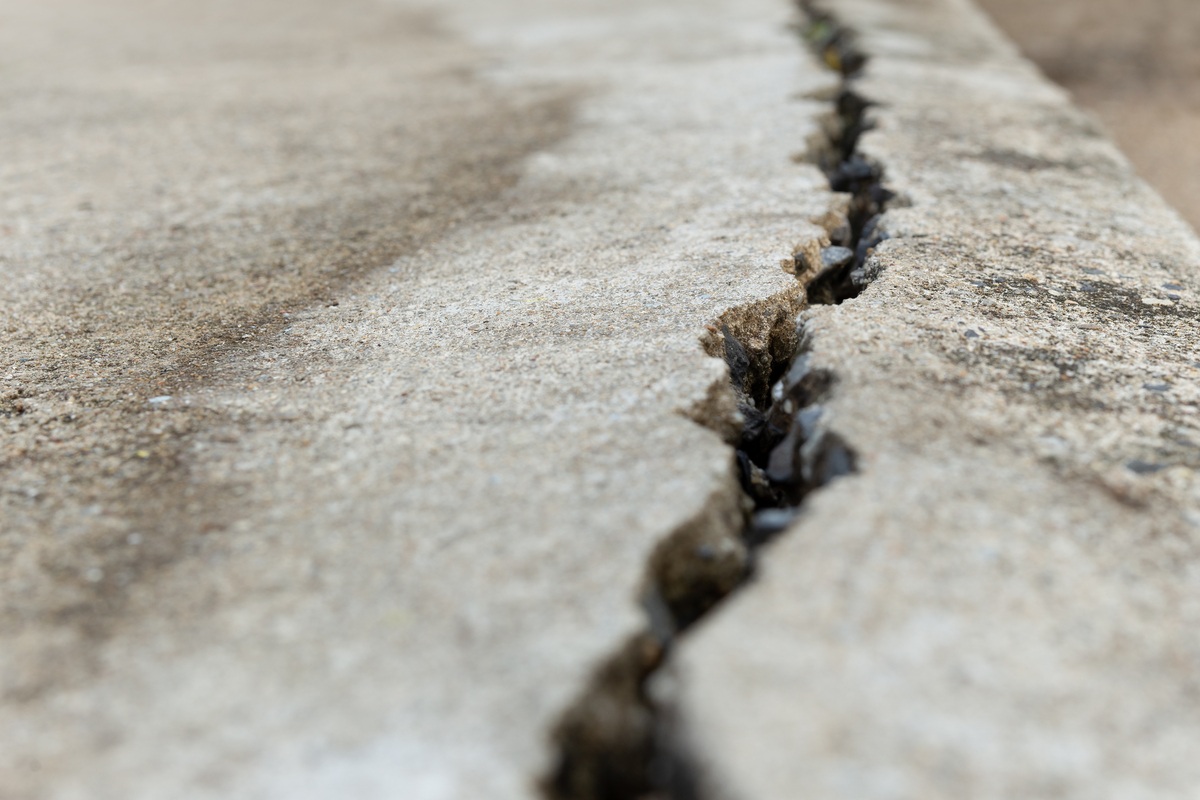
Cracks in a basement slab often raise immediate concern because they look alarming and can allow water or moisture into the home. Many types of concrete floor cracks are normal, but others point to soil pressure, settling, or drainage issues that need attention.
In homes across Kansas City, these problems usually start long before the homeowner notices a visible opening in the floor.
Why Concrete Basement Floors Crack
Natural Settlement and Concrete Shrinkage
Every home experiences some degree of settling as the soil adjusts to the structure’s weight. As concrete cures and dries, it can shrink slightly and create small lines in the surface. These hairline cracks are common and often do not affect the foundation. They should still be monitored, especially if a crack begins to widen or change direction.
Soil Conditions Beneath the Home
Kansas City sits on clay-heavy soils that expand when wet and contract when dry. This movement can push against the underside of the slab. In certain seasons, the soil produces enough force to cause heaving or lateral pressure. Any noticeable uplift in the slab or changes in the floor’s level should be checked quickly to avoid larger structural issues.
Hydrostatic Pressure and Drainage Problems
When water builds up around the outside of the foundation, pressure increases along the walls and floor. This pressure can force cracks into the slab or push water through existing openings. Drainage problems often reveal themselves at the same time floor cracks begin showing moisture or staining.
Construction or Curing Issues
A basement floor may crack if the slab was poured too thin or dried too quickly. Temperature, humidity, and concrete mix ratios influence how well the slab cures. If curing happens unevenly, the top layer can separate or flake, making the floor more vulnerable to moisture and wear.
How Drainage Affects Basement Floor Cracks
Poor Grading Around the Foundation
If the yard slopes toward the foundation, water flows directly into the soil near the basement. Over time, this increases moisture under the slab and raises the chance of new cracking.
Inadequate Gutters and Downspouts
Gutters that overflow or downspouts that discharge too close to the home can saturate the soil around the foundation. Water that cannot drain away often works its way through the floor at the weakest points.
Rising Groundwater Against the Foundation
When groundwater sits high, pressure builds below and around the slab. This pressure often pushes water through small slab openings or cove joints.
How Water Pressure Leads to New or Widening Cracks
Once water enters a crack, it can erode the fill beneath the slab and cause a cycle of sinking or deterioration. Expanding moisture creates pathways that eventually widen.
Pro Tip: Keep gutters cleaned twice a year to reduce soil saturation around your home. Simple maintenance makes a major difference in preventing long-term basement issues.
Need expert help with basement evaluation? Contact KC Pier for a free consultation.
The 6 Most Common Types of Basement Floor Cracks
1. Heaving Cracks from Expansive Soil
Heaving occurs when wet clay soil expands upward and lifts the slab. These cracks often appear with raised or uneven sections of flooring. They signal a serious soil movement problem that requires a full inspection.
2. Settlement Cracks and Sinking Slabs
A slab may drop if the soil beneath it compresses or washes out. This creates gaps, trip hazards, or long uneven lines across the floor. Movement in the slab usually means the supporting soil is unstable.
3. Cove Joint Gaps Letting Water Enter the Basement
The cove joint is the small gap where the floor meets the wall. Water often seeps through this area when hydrostatic pressure increases. Sealing the joint rarely solves the problem because it does not relieve the pressure behind the wall.
4. Hairline Shrinkage Cracks
These thin lines are cosmetic in most cases. They appear as concrete dries and typically stay the same size. They should only be addressed if water begins to enter through the crack.
5. Cracks Wider Than 1/8 Inch
Cracks above this width allow water, moisture, and soil gases into the basement. They can indicate that soil movement or drying shrinkage has progressed further than normal.
6. Spalling and Surface Flaking
Spalling creates rough, chipped areas where the surface layer separates from the concrete. It often appears when the slab was overworked or if the mix contained too much water during installation.
Key Takeaway: Concrete floor cracks combined with movement, moisture, or lifting of the slab are the most important signs to address quickly.
Warning Signs a Basement Floor Crack Indicates a Bigger Problem
Upward Movement or Bulging in the Slab
Any section of floor that rises or dips usually indicates soil expansion or settlement beneath the home.
Water Seeping Through Cracks or the Cove Joint
Moisture is a clear sign that groundwater or surface runoff is putting pressure on the foundation.
Cracks Combined With Wall Shifting or Basement Moisture Issues
Floor cracks connected with wall movement, panel bowing, or staining suggest broader foundation stress.
Persistent Humidity, Odors, or Radon Indicators
Openings in the slab can allow soil gases and moisture into the basement, increasing odor and air quality concerns.
How to Prevent New Basement Floor Cracks
Improve Surface and Subsurface Drainage
Direct water away from the foundation through proper yard grading or drainage adjustments.
Maintain Gutters and Downspouts
Make sure downspouts extend several feet away from the foundation to limit soil saturation.
Manage Soil Moisture Around the Home
Avoid heavy watering near the foundation and maintain consistent soil moisture through seasonal changes.
Reduce Water Pressure Around the Foundation
Interior drainage systems and sump pump maintenance help control groundwater levels and reduce pressure on the slab.
When to Call for a Professional Inspection
You should contact a foundation specialist any time you notice movement in the slab, repeating moisture issues, widening cracks, or gaps forming between the slab and walls. Early evaluation prevents small problems from turning into costly structural repairs.
Schedule a Basement Floor Crack Evaluation
Concrete issues often start small, but they rarely improve on their own. If you see signs of sinking, heaving, moisture, or unusual cracking, we can assess the problem and recommend the right approach. Schedule a free inspection with KC Pier today to protect your home and maintain a dry, structurally sound basement.