Kansas and Missouri both sit inside EPA Radon Zone 1, the highest risk category in the country. Most Kansas City homes test above the 4.0 pCi/L action level at some point, which is why radon mitigation has become one of the most common upgrades buyers and sellers ask us about. The question we hear most often is simple. Do these systems actually work? The short answer is yes, and we’ll explain exactly why below.
Why Radon is a Serious Issue for Kansas City Homes
Kansas City’s clay-heavy, uranium-bearing soils trap radon gas underground. When the gas finds a path through slab cracks, sump pits, or utility penetrations, it builds up in basements and lower levels where families spend the most time.
Three factors make the problem worse locally:
- Soil chemistry: Uranium in the soil constantly produces radon.
- Foundation types: Most homes have basements or finished lower levels.
- Seasonal sealing: Winter closed-house conditions push levels even higher.
Long-term exposure is the second leading cause of lung cancer in the United States after smoking, which is why local testing matters more than most homeowners realize.
Key Takeaway: Living in the Kansas City metro puts you at a higher baseline radon risk than most of the country. Testing is the only way to know your actual number.
How Radon Mitigation Systems Work
A properly designed system creates negative air pressure under your foundation, so radon never enters the living space.
Sub-Slab Depressurization (SSD)
This is the EPA-recommended method and the one we install most often. Our team cores a suction point through the slab, runs a sealed PVC vent line up through the home, and adds a continuously running fan that pulls radon-laden air from beneath the foundation. The gas discharges safely above the roofline, well away from windows and eaves.
Crawl Space and Slab-on-Grade Systems
Homes without full basements still get elevated readings through slab cracks, exposed soil in crawls, or unsealed sump pits. For those layouts, we install sub-membrane systems with a heavy vapor barrier or adapt the SSD method to fit the foundation.
Pro Tip: Active systems with a fan consistently outperform passive ones. In a Zone 1 area like Kansas City, passive setups rarely bring levels low enough on their own.
What Results Look Like After Installation
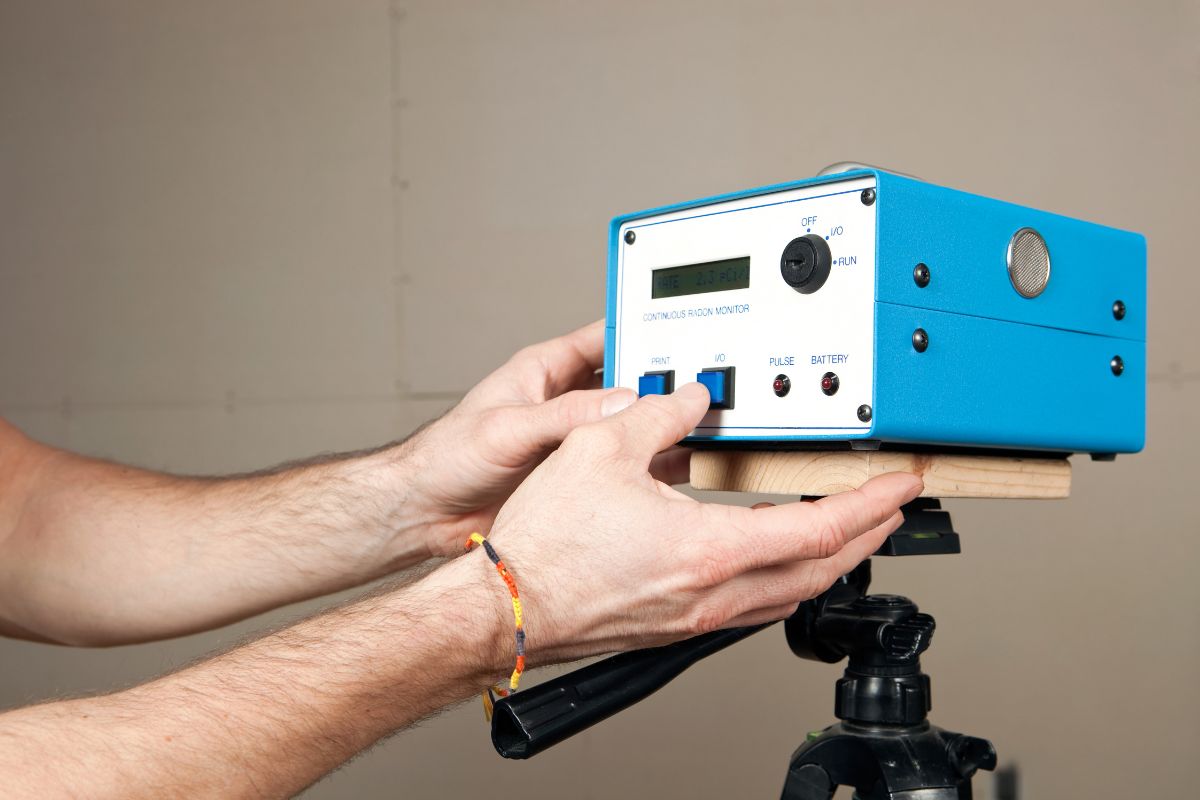
After installation, we run a second 48-hour test using a continuous radon monitor. The hour-by-hour readings confirm the system is working and produce documentation that buyers, sellers, and inspectors recognize.
Typical Reductions We See
| Starting Level | After Mitigation | Reduction |
| 20.0 pCi/L | 0.4 to 1.5 pCi/L | 92 to 98% |
| 10.0 pCi/L | 0.3 to 1.0 pCi/L | 90 to 97% |
| 6.0 pCi/L | 0.2 to 0.8 pCi/L | 87 to 96% |
How We Verify Radon Mitigation Performance
Most installs finish in three to five hours during a single visit, and you can stay in the home while we work. After the fan starts pulling, we leave a CRM in place for 48 hours and share the report directly with you.
Need help testing your home or installing a system? Contact KC Pier for a free consultation and a 48-hour CRM test today.
What Radon Mitigation Costs in Kansas City
Pricing in our market typically falls in the $900 to $1,500 range for most homes.
What Drives the Price
- Foundation type (basement, slab, or crawl space)
- Home layout and vent routing
- Number of suction points required
- Electrical work needed for the fan
What You Get Long Term
- Operating cost of roughly $3 to $8 per month in fan electricity
- Transferable system warranty that carries over to the next homeowner
- Documentation that holds up in real estate transactions
Pro Tip: Ask any contractor for a transferable warranty in writing. In the Kansas City real estate market, that paperwork can save a deal at closing.
When Systems Fail and How We Prevent It
Most “the system didn’t work” stories trace back to a handful of installation errors.
Common Mistakes We See
- Undersized fan for the home’s footprint
- Slab cracks or sump pits left unsealed, short-circuiting the suction
- Discharge vented too close to windows, letting gas re-enter
- Manometer (the pressure gauge) was ignored after the installation
Why Integration With Foundation Work Matters
Because our team also handles foundation repair, basement waterproofing, and sump pump systems, we plan the radon work around the rest of the foundation. That means sump lids get sealed correctly, vent lines do not conflict with drain tile, and repairs happen in the right order. Hiring a single team to handle both saves money and prevents conflicts down the road.
Schedule Your Radon Test With KC Pier
Radon is not a problem you can see or smell, but testing is fast, and the fix is permanent. We provide professional CRM testing, custom-designed systems, and warranties that transfer at resale. Whether you are buying, selling, or simply want peace of mind for your family, our local team is ready to help you schedule professional radon mitigation for your Kansas or Missouri home.