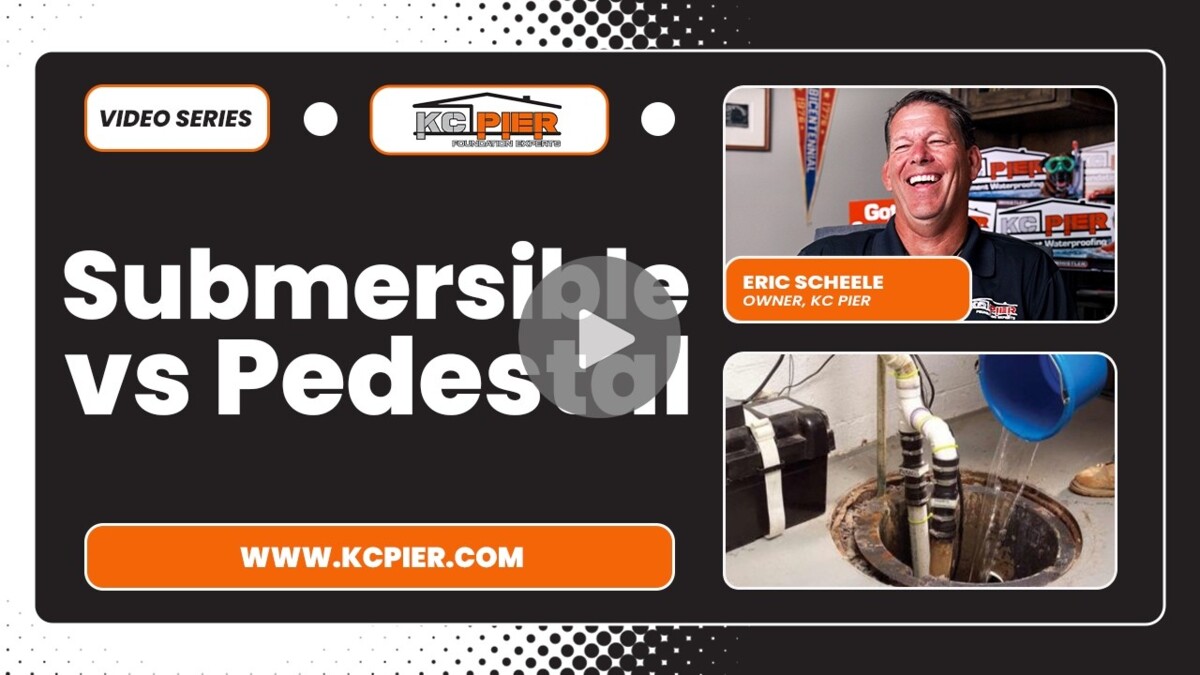
A failing pump or a new sump area in the basement raises one key decision: a submersible or pedestal sump pump. The short answer is a submersible pump. The submersible vs. pedestal sump pump choice comes down to placement, and the submersible model stays out of sight, runs quietly, and keeps its components inside the basin.
At KC Pier, we install submersible sump pumps for our customers. Below, we explain how both types work, what goes into our systems, and why we made that choice.
How Both Types of Sump Pumps Work
Both pump styles rely on the same basic mechanics. The difference comes down to where the pump is placed and whether its components are waterproof.
The Float Mechanism
Every sump pump uses a float inside a basin. As water collects and rises in that basin, the float lifts with it. Once the float reaches a certain point, it triggers the pump to turn on.
Where Each Pump Sits
A submersible pump goes inside the basin. A pedestal pump sits above it. Pedestal pumps are placed above the basin because the components inside may not be waterproof, so keeping them out of the water protects them.
Submersible vs Pedestal Sump Pump: Key Differences
Where the pump is placed affects how much space it takes up and how much you hear it. Here is how the two compare.
| Feature | Submersible Sump Pump | Pedestal Sump Pump |
| Location | Inside the basin | Above the basin, to protect components that may not be waterproof |
| Size | More compact and often out of sight | Less compact |
| Price | Typically higher upfront cost | Tends to be cheaper |
| Installed by KC Pier | Yes | No |
Why We Choose Submersible Pumps
Submersible pumps are compact, so you won’t necessarily see them in your basement. We can also encapsulate the pump and seal the top of the basin, which keeps it extremely quiet. In many homes, you won’t even hear it running.
Why We Don’t Install Pedestal Pumps
Pedestal pumps tend to cost less. They don’t meet the level of quality we want to deliver for our customers, so we simply don’t install them.
Key Takeaway: Both pumps share the same float mechanism. Placement inside the basin makes a submersible pump compact, and sealing the basin keeps it quiet.
Need expert help with your sump pump? Contact KC Pier for a free consultation.
What Goes Into a KC Pier Sump Pump System
Our systems combine a commercial-grade primary pump, a backup pump, and a sealed basin.
Commercial-Grade 3/4 Horsepower Pumps
Our sump pumps use commercial-grade components and run at 3/4 horsepower. Many pumps you’ll find at big box stores or with other contractors run at 1/3 or 1/2 horsepower.
Backup Pump and Warranty Coverage
Our systems include a backup pump behind the primary pump. If the main pump fails or loses electricity, the backup takes over. Together, the two pumps create a high-grade system.
Our sump pumps are covered by a warranty of up to five years. Homeowners enrolled in our foundation warranty programs can extend that coverage to a lifetime.
Pro Tip: Ask whether your sump pump system includes a backup that takes over if power to the main pump goes out.
Choosing the Right Sump Pump with KC Pier
Whether you need to replace an existing sump pump or create a new sump area, our team can help you plan the right setup.
What Happens During a Consultation
One of our professionals will come to your home and take a look at your basement. The consultation takes about 30 to 40 minutes, and you’ll leave with a few options. Our consultants keep the process low-pressure so you can make the choice that fits your home.
Submersible or Pedestal Sump Pump: Our Recommendation
We recommend a submersible pump because it stays compact, out of sight, and inside the basin. Paired with commercial-grade components, a backup pump, and warranty options up to a lifetime, it gives you confidence that your basement will be taken care of for a long time.
If you’re weighing a submersible or pedestal sump pump, call KC Pier today to schedule your consultation, and let our team design the right submersible sump pump system for your home.