
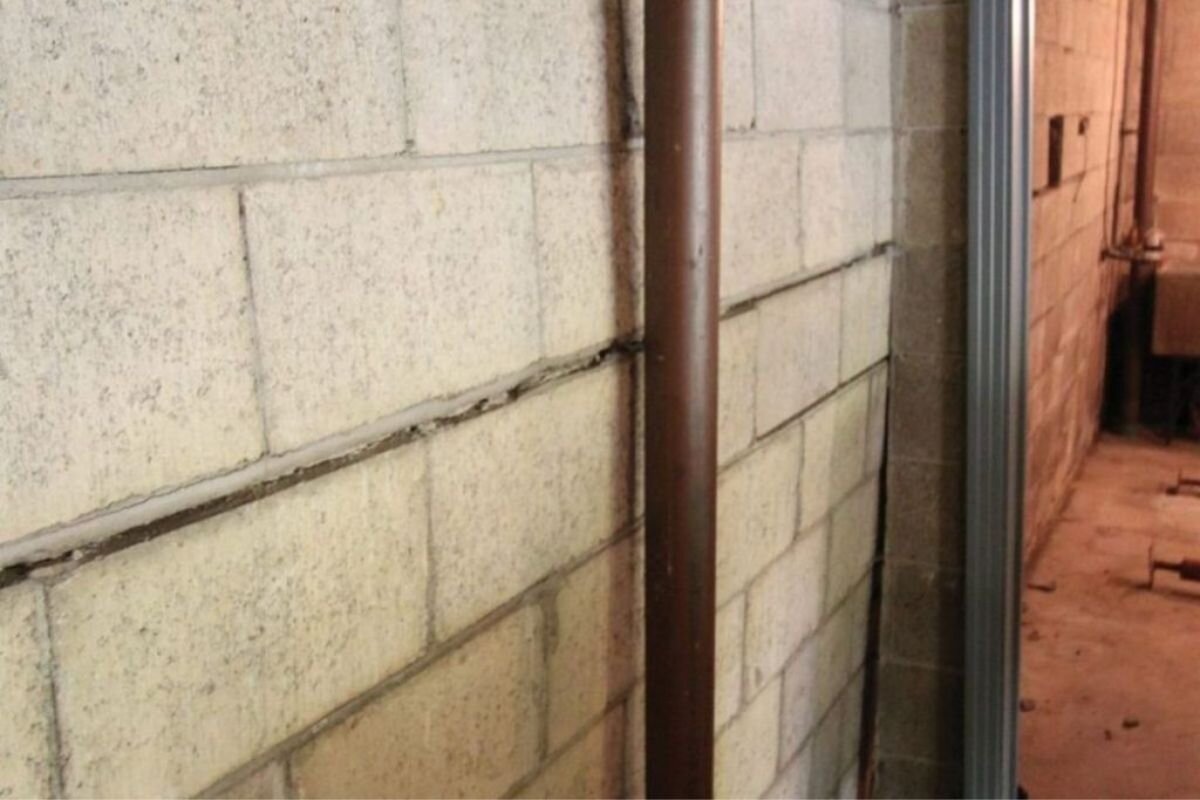
A bowing basement wall is one of the most common structural concerns we see in Kansas City homes. Many homeowners ask us when to be concerned about a bowing wall, and the honest answer is that any inward curve means the wall is already under pressure.
How urgent the situation is depends on how far the wall has moved and whether it is still moving. This guide gives you a fast, reliable way to judge that risk yourself before you ever pick up the phone.
The Short Answer: Three Levels of Concern
Not every bow is an emergency, but every bow deserves attention. Here is how we sort the risk:
- Call right away: the wall has moved more than 2 inches, a horizontal crack is widening, the wall is separating from the floor, or movement is getting visibly worse.
- Call within a few weeks: you can see a clear bow under 2 inches, cracks are stable, and doors near the wall have started to stick.
- Monitor and plan: you notice hairline cracks with no measurable inward movement yet.
Key Takeaway: A bowing wall never repairs itself. The longer the pressure goes unaddressed, the more the wall moves and the more the repair costs.
How to Tell When to be Concerned About a Bowing Wall
You can estimate the severity of the problem in about five minutes with tools you already own.
The 5-Minute Plumb-Line Test
- Tie a small weight, like a bolt, to a length of string.
- Hold the string against the top of the wall so it hangs straight down the face.
- Measure the gap between the string and the wall at the top, middle, and bottom.
- Record the largest gap. That number is your deflection, or how far the wall has shifted inward.
What Your Measurement Means
The deflection number tells you a lot about your options:
- Under 1 inch: early stage, usually the easiest and most affordable to correct.
- 1 to 2 inches: moderate, the wall needs reinforcement to stop further movement.
- 2 to 4 inches: severe, more aggressive stabilization is required.
- Over 4 inches: critical, the wall may be at risk of collapse and could need replacement.
Pro Tip: This test estimates severity, but it does not replace a professional inspection. A licensed expert checks the cause behind the wall, not just the symptom in front of you.
Warning Signs That Mean You Should Not Wait
Cracks and bows tell a story, and certain signs point to active, advancing pressure.
Red Flags That Call for Immediate Action
- Horizontal cracks across the middle third of the wall, the classic sign of soil pressure pushing inward.
- Stair-step cracks climbing through the mortar joints of a block wall.
- Separation or shearing where the wall slides away from the floor or ceiling.
- Water seepage along a crack, which signals pressure and a waterproofing failure at the same time.
Knowing When to be Concerned About a Bowing Wall: Early Signs
- Interior doors or basement windows that suddenly stick or stop closing cleanly.
- New gaps opening between the wall and the floor joists.
- Fresh hairline cracks that reappear or lengthen after heavy rain.
Key Takeaway: One warning sign is worth a closer look. Two or more together usually means the wall is actively moving.
Need expert help with bowed wall repair? Contact KC Pier for a free, no-pressure structural consultation. Our team will measure the wall, find the real cause, and explain every option that fits your home and budget.
Why Kansas City Walls Bow in the First Place
Local conditions make this a frequent problem across the metro, and understanding the cause helps you protect your home.
Our Clay Soil and Freeze-Thaw Cycles
Kansas City sits on expansive clay soil that swells when wet and shrinks during dry spells. Our winters add freeze-thaw cycles that push frozen, expanding soil against foundation walls. That repeated pressure is the leading reason walls in our area begin to bow inward.
Other Common Causes We See on the Job
- Poor grading or gutter runoff that pools water against the foundation.
- Tree roots placing added force on an already stressed wall.
- Original construction that lacked proper reinforcement or drainage.
The Cost of Waiting
The math on a bowing wall is simple. A wall caught under 2 inches can often be stabilized with carbon fiber straps, a clean and affordable fix. Once a wall passes 4 inches, you may be looking at wall anchors, steel I-beams, or full excavation and replacement, which costs far more.
Early action keeps your repair options open and your budget under control. Waiting removes the cheaper solutions from the table one inch at a time.
How We Fix Bowing Walls
We match the solution to the severity:
- Steel I-beams to stabilize the wall in place, with the potential to straighten it over time as the beams are tightened.
- Wall anchors to counter the soil pressure and pull a wall back toward vertical.
- Full excavation when a wall is too far gone to stabilize and needs to be rebuilt or relieved of outside pressure.
Every repair we install is backed by our lifetime warranty and performed by trained KC Pier employees, never subcontractors.
Schedule Your Free Inspection
A bowing wall is a problem you can manage when you act early and a costly one when you wait. If you have measured a bow, spotted a horizontal crack, or simply have a gut feeling something is off, the safest move is a professional set of eyes on your foundation.
Reach out to KC Pier today for a free estimate, and let our team give you a clear, honest answer about when to be concerned about a bowing wall in your home.